We often tend to idealize or schedule tasks for specific moments. With greater or lesser enthusiasm, when the time comes we find ourselves flooded with distractions that prevent us from completing the task or make it take longer than necessary. Personally, this is a constant in my life, especially when I create to-do lists for my free time. In these brief lines, I want to share something I learned about procrastination that I find very interesting.
From time to time, I visit bookshops to see what new and interesting titles I might read. One day, I came across this gem: Microexperiments by Anne-Laure le Cunff. Although I won’t go into detail about the book, if you consider yourself someone psychologists call multipotential, I strongly recommend you take the time to read it.
Back to the topic — this book has a fascinating chapter on procrastination, and I’d like to share a few key ideas with you.
Thinking outside the box.
When we postpone an activity, our thoughts usually revolve around finding excuses. “I’m not good enough,” “I don’t know where to start,” “It’s too boring,” “It’s too much work,” and so on. Then we feel guilty for not completing the task.
One of the first actions Anne-Laure proposes in her book is to embrace procrastination and look at it from a different perspective.
“Instead of being a sign of laziness or lack of discipline, procrastination points to psychological obstacles that need to be addressed.”
Procrastination is not the enemy. Microexperiments — Anne-Laure le Cunff
Why do we procrastinate?
Hugo M. Kehr, in his research “Integrating Implicit Motives, Explicit Motives, and Perceived Abilities: The Compensatory Model of Work Motivation and Volition, 2004,” describes how human motivation arises from the interaction of rational (“head”), affective (“heart”), and practical (“hands”) factors.
“Rational factors are explicit motives. It’s your head telling you what it thinks is right. Affective factors correspond to implicit motives. It’s your heart telling you what will make you feel good or bad. Finally, practical factors have to do with what you consider your capability: the skills, knowledge, and tools you think you need to do something. They’re your hands telling you what to do.”
Procrastination is not the enemy. Microexperiments — Anne-Laure le Cunff
Anne-Laure extrapolates this study on motivation and adapts it to procrastination, presenting us with this diagram about tasks.
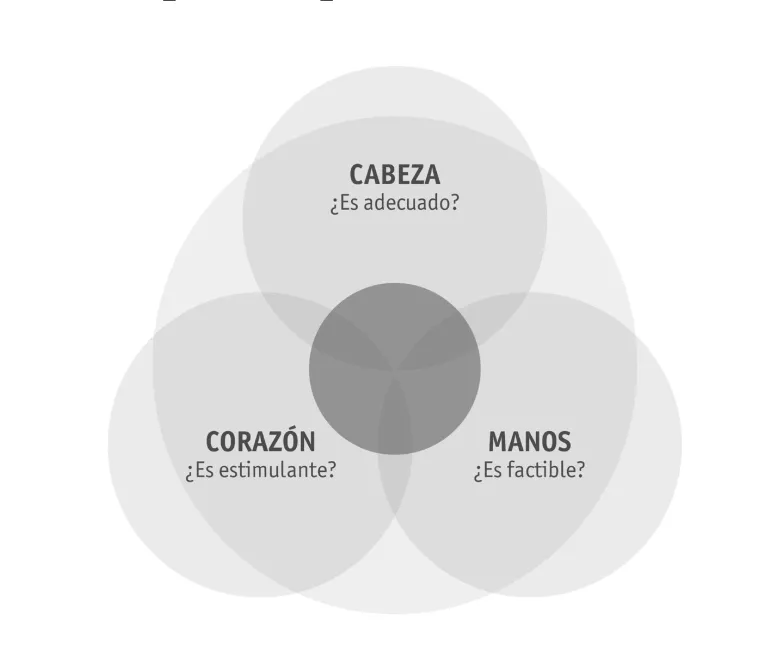
Image 1. Procrastination factors. Microexperiments — Anne-Laure le Cunff
How can we apply this?
In her book, Anne-Laure proposes what she calls the triple-check process, which is essentially a kind of data collection you perform by asking yourself the three questions shown in the diagram.
Pausing for a moment and writing down the factors that answer each question can help you determine “why you’re not getting around to that task” — and not only that, but also give you a new vision of how you can break it down or reframe it.
| Origin | Explanation | Solution |
|---|---|---|
| Head | I think the task is not the right one | Redefine strategy |
| Heart | I feel the task is not stimulating | Redesign the experience |
| Hands | I believe the task is not feasible (I lack the knowledge or resources) | Ask for help or seek training |
What happens when your head, heart, and hands are aligned, but you still procrastinate?
Anne-Laure also has an answer to this question — with another question: asking yourself whether the problem lies not in you, but in the system you work in. Sometimes we find ourselves in environments that absorb us so completely and drain the last drop of our energy with ever-growing productivity demands — yet these efforts are never enough. We tend to believe that procrastination stemming from this is a moral failure rather than a systemic one.
The invitation — which from my point of view is absolutely brilliant — in this chapter of this book is that those small idle distractions can lead you to discover something important about yourself and point toward a more stimulating and beneficial path for carrying out many of life’s tasks. The most important lesson here is to learn to listen to the message and dig into what it means.